
Trading on Quotex feels exciting at first. But without the right tools, most beginners lose money fast. That is why picking the best indicator combination for Quotex trading matters so much. The right mix of indicators helps you read the market clearly. It also removes guesswork from your entries and exits.
In this guide, you will learn the top indicator combinations used by experienced traders. You will also learn why single indicators often fail. Additionally, we will cover money management, common mistakes, and answers to the most searched Quotex questions.
Disclaimer: Trading involves real financial risk. This article is for educational purposes only. It is not financial advice. Always trade with money you can afford to lose.
What Is Quotex Trading?
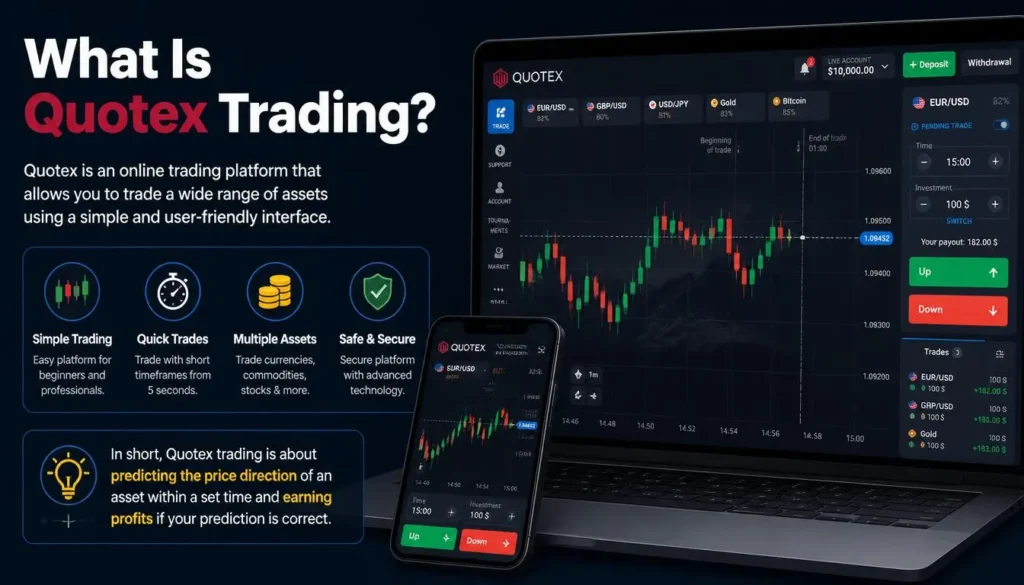
Quotex is an online trading platform. Traders use it to speculate on price movements of currencies, commodities, stocks, and cryptocurrencies. The platform is popular because of its simple interface. However, simplicity does not guarantee profit.
Success on Quotex depends on strategy, discipline, and timing. Indicators play a huge role in building that strategy. They turn confusing price charts into readable signals.
Why One Indicator Is Never Enough
Many new traders rely on a single indicator. Unfortunately, this approach often leads to false signals. A single tool only shows one side of the story.
For example, RSI shows momentum. But it does not show trend direction. MACD shows trend shifts. Yet it lags behind fast price moves. Consequently, combining indicators gives a fuller picture. This is why professional traders always stack tools together.
Best Indicator Combination for Quotex Trading
Below are the most effective and widely searched indicator combinations for Quotex. Each combination balances trend, momentum, and volatility.
1. Moving Average + RSI Combination
This combo is simple yet powerful. The moving average shows the overall trend. Meanwhile, RSI confirms whether the asset is overbought or oversold.
- Use a 20-period EMA for trend direction.
- Add RSI (14) to spot reversal zones.
- Enter trades only when both signals align.
As a result, this pairing filters out weak trades. Beginners often start here because it is easy to understand.
2. Bollinger Bands + Stochastic Oscillator
Bollinger Bands measure volatility. The Stochastic Oscillator measures momentum shifts. Together, they highlight strong reversal points.
When price touches the lower band, and stochastic shows oversold conditions, a bullish reversal often follows. Similarly, the upper band with overbought stochastic often signals a downward move. Therefore, this duo works well in ranging markets.
3. MACD + Support and Resistance Levels
MACD is excellent for spotting trend momentum. However, it becomes far more accurate when paired with support and resistance zones.
First, mark key support and resistance levels on your chart. Then, wait for MACD to cross above or below the zero line near these zones. This combination reduces false breakouts significantly.
4. ADX + Parabolic SAR
ADX tells you whether a trend is strong or weak. Parabolic SAR shows potential entry and exit points along that trend.
- ADX above 25 indicates a strong trend.
- Parabolic SAR dots below price suggest a buy signal.
- Dots above price suggest a sell signal.
This combination suits traders who prefer trend-following strategies rather than reversal trading.
5. RSI + Bollinger Bands + Volume
This triple combination is considered one of the strongest setups. RSI confirms momentum. Bollinger Bands confirm volatility extremes. Volume confirms whether the move has real strength behind it.
When all three align, the probability of a successful trade increases. Although this setup requires more screen time, many experienced traders swear by its accuracy.
How to Choose the Right Combination for You
Every trader has a different style. Therefore, the best indicator combination depends on your goals.
- Scalpers should use fast indicators like Stochastic and EMA.
- Swing traders benefit more from MACD and support-resistance zones.
- Beginners should start with Moving Average and RSI for simplicity.
Additionally, always test any combination on a demo account first. Never risk real money before you fully understand the setup.
Risk and Money Management Tips
Indicators alone cannot guarantee profits. Money management protects your capital during losing streaks. Consider these rules:
- Never risk more than 1-2% of your capital per trade.
- Always set a daily loss limit.
- Avoid revenge trading after a loss.
- Keep a trading journal to track performance.
These habits matter just as much as your indicator strategy. In fact, many traders fail not because of bad signals, but because of poor discipline.
Common Mistakes Traders Make With Indicators
Many beginners overload their charts with too many tools. This creates confusion rather than clarity. Others ignore market news, which can override any technical signal instantly.
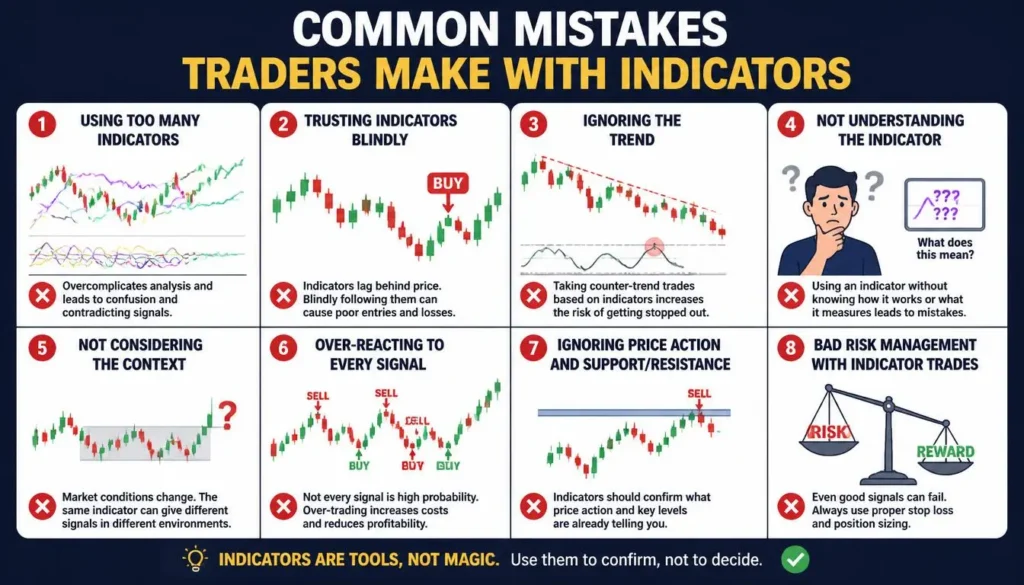
Furthermore, some traders chase losses instead of following their plan. Consequently, they abandon a good strategy after just one losing trade. Patience and consistency matter more than perfection.
Final Tips for Better Results
Stick to two or three indicators at most. Combine trend, momentum, and volatility tools rather than repeating similar ones. Also, always confirm signals across multiple timeframes before entering a trade.
Frequently Asked Questions (FAQs)
Conclusion
Finding the best indicator combination for Quotex trading is not about complexity. Instead, it is about clarity, confirmation, and consistency. Whether you choose Moving Average with RSI, or a more advanced setup like RSI with Bollinger Bands and Volume, the key lies in disciplined execution.
Always remember that indicators are tools, not guarantees. Combine them wisely, manage your risk, and practice patience. Over time, this approach builds far better trading results than chasing quick signals ever could.